An Open Letter to Riccardo Webb

Dear Mr Webb,

In recent weeks it has become obvious to both of us that our prank war is escalating, escalation in a prank war of this type can get ugly, and so I have decided to insure myself against such ugliness. I do not intend to ever find my desk covered in llamas again.

Now Mr Webb, how do I insure myself against such actions? Well this is how: I used my GoDaddy account to buy your name all over the internet. I now own 14 different versions of RiccardoWebb.[whatever] or RiccWebb.[whatever]. I quite literally own your name.

Right now Mr Webb you are probably wondering what I might do with such ownership, well, should the need arise I might deploy this deterrent, using my skills as a digital marketer and attempt land these pages as #1 through #14 search results on Google, for example.

Now, this would all mean nothing without a demonstration so here is an example of what all these pages could look like, so here one is: riccardowebb.com. Enjoy.

Please consider this purchase of your name as a deterrent, the nuclear option if you will. Should you choose to continue with the current escalation of this prank war, I will use this deterrent.

And before you get on GoDaddy yourself remember: I have covered all my own domains.

Oh, and for kicks I took @RiccardoWebb on Twitter as well.

Your move Mr Webb.

Marketing Deconstructed: NatYes (Natwest Mortgage campaign)

It’s been two weeks since my last Marketing Deconstructed post on Coke, so back into the blogging fray and this time I am looking at NatWest’s NatYes campaign. In summary: I hate this campaign for 2 reasons, 1) It’s call to action didn’t work and 2) Isn’t saying yes to too many mortgages what got this bank into trouble in the first place? Now let’s dig in:

What are they trying to do?

I’m not 100% sure but here is my theory: Housing prices are back on the rise  driven, at least in part, by government subsidised low deposit purchase programmes and the liquidity provided by quantitative easing from the BOE. NatWest and RBS (their parent) want to make some money and seize a chunk of this growing market, this integrated campaign is their attempt to do just that. But there is a problem: Natwest have, consciously or not, targeted a certain segment of the market, the higher risk element. Think about it: You want a mortgage, what’s your primary concern? The lowest interest rate? The lowest arrangement fees? Or just getting the mortgage approved? If you’re in the last camp you’re probably in a riskier segment of the market, NatYes proudly proclaims: “We say yes to 9/10 mortgage applications” – actively targeting those concerned about their credit rating, did they mean to do that? I don’t know. Another concern: In the post credit crunch world should a state owned bank that lost billions playing fast and loose with it’s mortgage risk profile be proudly proclaiming it’s saying yes to so many applications? I really am surprised this hasn’t blown up yet.

Have they succeeded?

Mixed results here too. The campaign is consistent and nicely integrated, the TV commercial is nice and all that’s well reflected on the front page of the website. BUT then there is the CTA, that’s important. The TV advert loudly proclaims: “search NatYes for more info” – OK cool, so why is it that for the first week or so of the campaign not Natwest sites ranked, in fact for a while the #1 rank was a blog post from an SEO manager about the failure of the CTA.

What could be better:

If you’re going to run a high budget, fully integrated campaign with a SEO led call to action then make damn sure you rank. In fairness I can see how this happened: The campaign launch date is set, the media is booked, then someone screws up and the SEO stuff isn’t ready to go, the campaign manager has to make a call, delay and lose the media or go and take the hit, they went, I might have done the same, but it’s a shame and shows not enough redundancy built into the campaign timing.

Regarding the why their doing this question: Hmmm, they know their risk profile better than me, but I think someone got a research report reading something like “People worry about their mortgage being rejected, of 2000 people surveyed that’s their top concern and no other bank is talking about it” so they ran with it, research can be a dangerous thing if not used carefully…

Scores on the doors:

This is a 3/10 job, it’s well integrated, the SEO issue is a fail but overall I think it’s a repeat of past mistakes, not all customers are good customers and not all profit is good profit! RBS learned this the hard way in 2008, I hope it’s not a lesson they need to learn again.

Marketing Deconstructed: Share A Coke With Friends

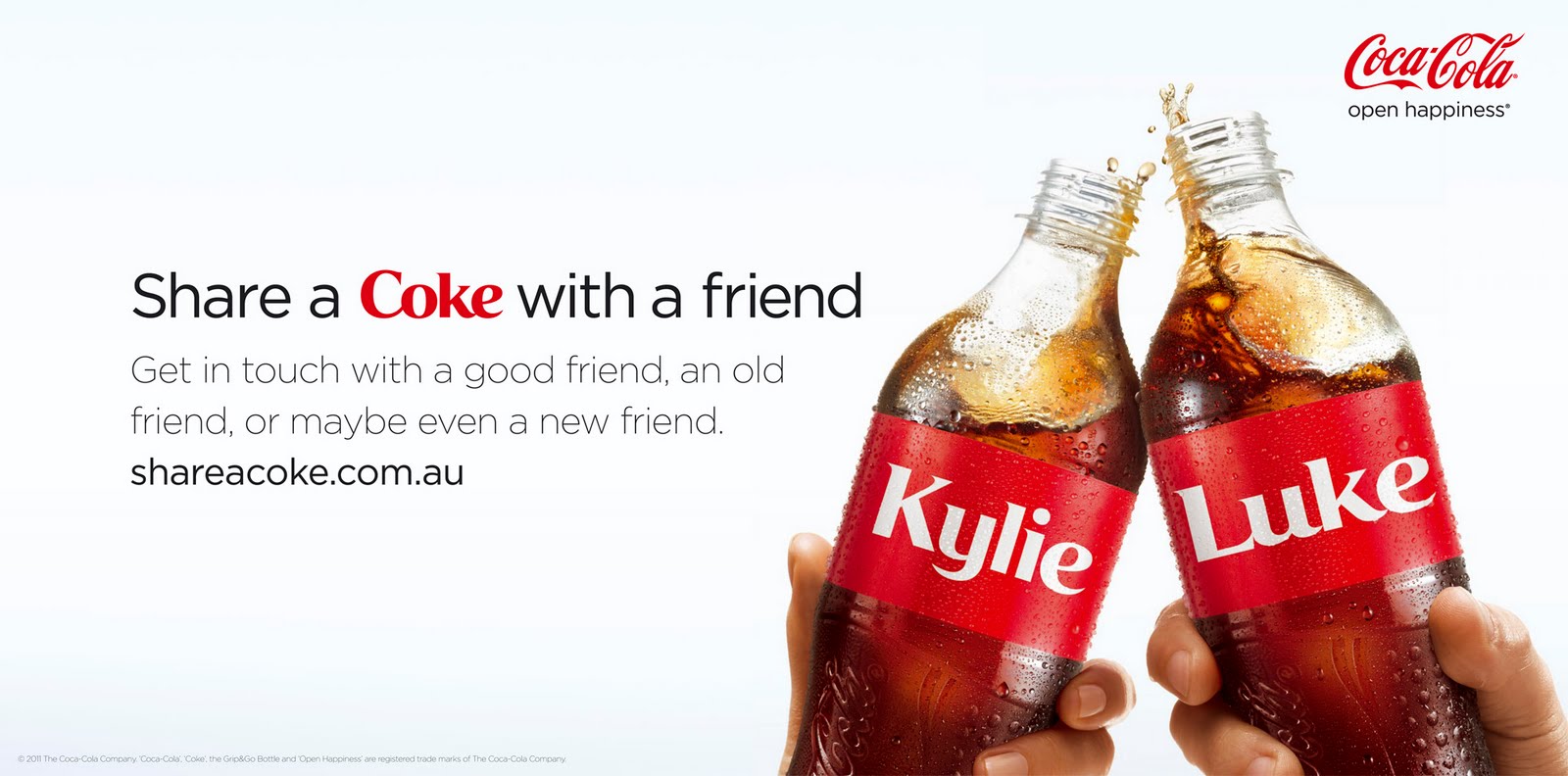
The second in my Marketing Deconstructed Series this one takes a look at Coke’s latest expression of their famous “happiness” brand essence:

Coke “share a Coke” campaign

To me this campaign is genius a feat of both great creative and great logistical skill:

What are they trying to do?

Coke have an enviable position as one of the worlds most valuable and well recognised brands with deep rooted recognition and associations including “Santa” – seriously, you ask people to say a word associated with Coke and many will say “Santa”! So the pressures off right? Marketing? Pah, just show up, phone it in, easy! NO WAY! The problem with being one of the worlds most iconic and valuable brands and market leader is shareholders expect you to not only stay there, they expect you to grow, no mean feat for a brand as big as Coke, sure they can diversify with new brands and products and expand into some markets (though they are pretty much everywhere now) but their success is still built on that big red cash cow brand “Coke” right in the middle, they gotta keep that one selling.

So this is about keeping the Coke brand fresh and fun, Coke want to be associated with happiness so as much as anything this is about making their consumers pick up a drink and smile. If that sounds vague it isn’t, Coke will have all sorts of sophisticated brand metrics tracking and survey data to measure their impact.

Have they Succeeded?

I think so, the reaction I’ve seen from friends and acquaintances across the web and in the real world show me a lot of consumers engaging heavily with this campaign and buying drinks for friends and colleagues. This is exactly the reaction Coke wanted, there are memes, pictures online and even GIF’s of people “finding their name”.

What could be better?

I am struggling to think of anything right now and here is why: Coke are a huge multinational, one of the biggest, with a huge brand, they’ve managed to not only execute a campaign that gets people to buy more Cola and talk about buying more cola but they’ve managed to do it in a totally integrated way, the experience and message is the same across all touchpoints, print, digital, retail and on the packet. This is a feat of activation and logistics. It’s also interesting to note that many companies would not have done this: the cost and logistics of redesigning all those labels for the Coke, Diet Coke and Zero brands then the extra costs of producing different labels in lower volume (maybe only a fraction of a penny per bottle or can but Coke product billions of these) this is a big campaign with big costs but it wasn’t a big risk: Coke clearly grounded their decisions on solid insight and when they decided what to do they went big, no half measures. Good stuff.

Scores on the doors!

10/10 here, it’s a great piece of work!

Marketing Deconstructed: SMART “Offroad” Commercial

Recently I had an idea for a blog, the idea was to deconstruct adverts and marketing campaigns, how they fit into the brand they’re promoting, their success or otherwise and reaction to them, I was going to call the blog marketingreconstructed.com but the URL was taken. Then I remembered I had a perfectly good blog here I wasn’t using nearly enough, so here is my new feature, in fact my only feature: Marketing Deconstructed.

Up first: SMART and their new “Offroad” campaign:

What are they trying to do?

Well it seems from the advert they are trying to do two things, 1) Establish the brand as quirky, funny and self depreciating, they want to be seen as different from the rest of the slightly po faced car industry, this sits well with who they are and the products they make and undoubtedly touches their target consumer who is going to be an independent thinker. 2) Demonstrate why you should buy a SMART car in a clever way: This is easier said than done and I think they’ve done a really good job. First off, they could have taken an eco road, but if I really want an eco car I will buy a hybrid and there is a lot of competition there, they could also have played on size and some kind of “bigger than you expect” angle, but the SMART four2 isn’t new, it’s been around 10 years or so now, so that wouldn’t cut through. The approach they took, poke fun at the 4×4 industry is good.

Did they succeed?

I think it’s too early to say, but to me it ticks all the right boxes, it’s cute, clever, and smart (pun intended). Sure this will get some backlash from the serious car owners and the 4×4 types but that’s good, they’ve taken a deliberate viewpoint here and people who buy a Smart are not going to be 4×4 converts anyway but they are the type who hates Chelsea tractors)

What could be better?

The TVC spot is great it broadly hit all the right notes for me, they’re could have been a longer, funnier, uncut version for social media and online that really takes the concept up a notch and they could take this into other areas: sports cars (imagine one of these on the Nurburgring!) However the SMART website and digital channels don’t seem to be carrying the same message or amplifying it, they also seem underwhelming as a whole which is a shame, if I’ve seen this video and then go to their .com page to find out more the same narrative should continue instead I am met with an old fashioned and very serious site.

Scores on the doors?

I give this an 8/10, it could have been a 9 or even 10 if the integration was better across digital and if they had taken it a bit further with other videos.

What do you think?

Facebook users decline in 14 of top 20 markets over last 3 months

Facebook has been in the news a lot this week, Facebook home is certainly an interesting development but that’s not what I want to write about today, its this:

Social bakers

That data is taken from Social Bakers for Q1 2013, it shows that Facebook users have declined in a whole load of markets. Europe and the USA are most numerous in the list of markets but the biggest % declines are in Indonesia and Malaysia.

This is a concern for Facebook, when combined with other recent surveys about Facebook losing their younger user base this could become a real problem.

Now the real question is does this mean that Facebook only continues to show paper growth as older users and lagards get into it and due to a few developing markets (Brazil etc.) but it’s not as important as it was 12-24 months ago as sites like Tumblr, Twitter etc. grow?

What do you think?

Taking on a new challenge

I know, I don’t blog often enough. This isn’t because I don’t have enough to say, as anyone who knows me will testify, it’s mostly because I have been very busy with work, moving house, and training for the Brighton Marathon (sponsor me!)

This blog post is about the first of those things that generally keep me from blogging, work. I love my job, I get to do amazing things like this:

And work with some awesome people. Nokia’s been through one hell of a transition in the last couple of years, it’s something I am proud I am part of and am sure the experience will serve me very well in the future.

Old Nokia logo

Now a new challenge has presented itself within Nokia and from the 2nd of April I will move out of the global social media team and start as Head of Digital Marketing and Advocacy for Nokia Europe. I’m excited, very excited, its a big and exciting job, in a new team with new challenges and responsibilities.

I am proud to have done such great work with some great people as global Editor in Chief, hopefully this is the start of something else I can be proud of.

But first: I have a marathon to run, will blog more after that, promise.

Aside

We often joke that the only thing you can be sure of in our team is that everything will change! The below kinda proves that point for large organisations:

It really validates the “mission leadership” approach to management, where a clear vision and mission is given to each team and sub missions to individuals or working groups within the team, everything works toward the mission and adapts to changes around the organisation to achieve it.

In today’s world it seems that organisations are changing far faster than they ever did previously, making clear missions and focus for individuals and teams a very necessary anchor.

Dan Wieden on the future of TV and social

Really interesting interview:

What I find particularly smart is the view on broadcast media as a conversation starter. The message here is simple really: Integrated marketing works. 

Manchester City vs QPR was a microcosm of all that is great and terrible about the Premiership

The 13th of May 2012 will go down as one of the most exciting days in Premiership history, if not footballing history. It had so many sub-plots I could barely keep up…

Man City with no top flight title since 1968 lead their greatest rivals Man U with a massive goal difference in their favour, all they have to do is not slip up against relegation fodder QPR, that is QPR managed by ex-Man U legend Steve Bruce, unceremoniously dumped from a management job at Man City after the money came in and he failed to deliver. Several of his key purchases from City starting against him.

But on the other end of the table there is the fight for survival between QPR and Bolton. QPR struggling to retain their premiership status after promotion last year and Bolton suffering from insane injury troubles this season including the shocking collapse of Muamba on the pitch against Tottenham earlier this year.

That is to say nothing of the fights for European places between Tottenham, Arsenal, Newcastle and Chelsea.

But that’s all by the by. Let’s focus on the Man City vs QPR game:

First off what was great about today at Man City:

Games like this always have the potential for poetry, matters of relegation and the championship are decided on the final day of the season in battles between those fighting to avoid the drop and those fighting for long-eluded glory. That is great. Today lived up to the hype, it was a great game of football, both sides fought to the end, both gave their all, as did the fans, there was real passion and that’s exciting.

There are not many sporting events in the world that can, organically, produce such amazing tension and so many BIG personalities (ahem, Tevez) and throw them all together with such skill to produce something awesome that also means so much to so many people (whatever else you can’t take anything away from the fans of Man City, they wanted it!)

But…

And it’s a big but. This match up should never have been the title decider, whatever we say about the passion of Man City, the players and the management no one can argue with the fact that the title really belongs to Sheikh Mansour bin Zayed bin Sultan Al Nahyan. He paid for it.

That makes me sad, teams get good, they make money out of being good, but that money and that success comes from developing young talent, from great management, coaching and everything else that goes with it. They are built over time. Look at Manchester Utd and Arsenal, even Tottenham (2,3 and 4 respectively this season) all have been built, long term. Yes Man U’s team is “worth” more than Man City’s (169m to 162m, I think) but it doesn’t matter, they didn’t have a single investor come in and buy all that in the last 3 years like City did.

The problem here is it’s unsustainable, teams owned by oligarchs and monarchs don’t put down roots, they pick off the best talent, pay obsene money and further the insane levels of unsustainable economics that exist in modern football, they drive smaller clubs salaries up, they drive the expectations of young players up, they create a vacuum that uses large amounts of money to substitute everything else, it sucks… (excuse the pun)

And then there is Mr Barton.

A troubled young man to say the least, probably to be subject to one of the longest violent conduct bans ever seen, but he will probably play again, somewhere. This is the kind of person being created by the modern game, we’re taking people with well co-ordinated feet, who love a sport, we’e throwing literally £100,ooo’s a week at them, then putting them up on a huge pedestal and scrutinising their every move as they are mollycoddled by a team of people who take care of everything for them. We then wonder why some of them are nuts.

Today was a great day

Full of drama, passion and goals, but I wonder how, in the long term, football will continue to produce such spectacles.

Is community management a bad idea?

I had an interesting conversation on Friday with a marketing agency called Qube from Brighton, we sat on the roof terrace at Nokia’s Soho office and began by discussing the state of the industry, a point I made in that meeting and a point I fully planned to carry through into a blog post was that community management is, to an extent, becoming a commoditized offer, as the scale of online communities grow managing the 100’s, 1,000’s or even 100,000’s of engagements every day with large brands social accounts, on key networks, Twitter, Facebook and blogs to name a few becomes a huge scaling challenge. So how do brands solve that challenge? They look at technologies and outsourced or in-house solutions (people) to solve the scale issue, to deal with these queries efficiently.

The problem we have at the moment are that most of those solutions are driven from comms and marketing, but these are not comms or marketing problems, many brands still look to marketing or comms agencies (be they social media specialists of not) to run their social presences and engage on their behalf. Agree or disagree with this approach scale makes doing this for much longer untenable, in the same way that you don’t pay marketing agencies to staff your inbound call centres you don’t pay them  to engage with customer service queries in social.

So we begin to look to the same technological and outsourcing solutions we looked at for our customer care (read: call centres), we implement systems to find, batch, and present these Facebook or Twitter queries to lower-skilled and (crucially) lower priced customer care representatives who duly answer from their digital call centre, or “social media hub”, “war room”, “control centre” or whatever you want to call it. Even back in my days at 6Consulting (Now Radian6 UK) selling monitoring software I pitched, and sold, to call centre operations looking to get in on this game…

So that’s it, as these brand social presences evolve then the CS teams come in and take on the reactive elements, leaving marketing to get on with using the “reach” and “engagement” to generate “buzz” and sell stuff while CS clean up the mess, everyone is back in their box and we all move on.

No way! The problem is that as we look to engage at real scale we industrialise the process and it loses the point. Sure you can tick your hypothetical “social business” box and tell your CMO or CEO “we’re engaging X people per day” but you’re missing the point. Why did customers come to bitch on your Facebook page (for example) in the first place? They lacked a voice, they felt like a number stuck on hold to a call centre to talk to someone who didn’t care, didn’t understand and read a script, so they found a new place to go. If you turn this new place into a microcosm of the old place (marketing broadcasting messages and a cost-managed “social call centre” team dealing with complaints) then you have failed and missed the point: Customers are complaining for a reason.

Instead of thinking about how best to segment or manage your customers, promoters and detractors between different silos, cost centres and processes, why not put your customers at the heart of your business? I mean right in the middle, forget trying to “manage the community” and instead listen to them. No that doesn’t mean listen as in “I got me a monitoring tool and an analyst / agency to give me a monthly PowerPoint” I mean active listening, horizontally across the business. Democratise within the organisation and give your employees the power to listen, engage, learn and act, give them tools to help, tie bonuses to it, make it part of the contract that they have to spend 1 day a month responding on facebook or whatever it might be!

But what about managing the community? Is it really a bad idea? Well, as usual there is no easy answer, but my response would be to think about this differently: Manage your community by showing them you care, really care, not by @replying them and saying so, but by fixing the problems, by making better products and by making sure they get a first class experience at all touch points with social as a key feedback loop. 

In short, Community management is only a bad idea if it’s done badly. Find the problems and inefficiencies that lead to people coming onto your social properties and bitching, fix them. I have said this before and I will say it again:

Forget trying to be a social business, be a good business!